
You are here: Home » Food Safety Inspections vs. Audits: Building a Robust, Risk-Based Food Safety System
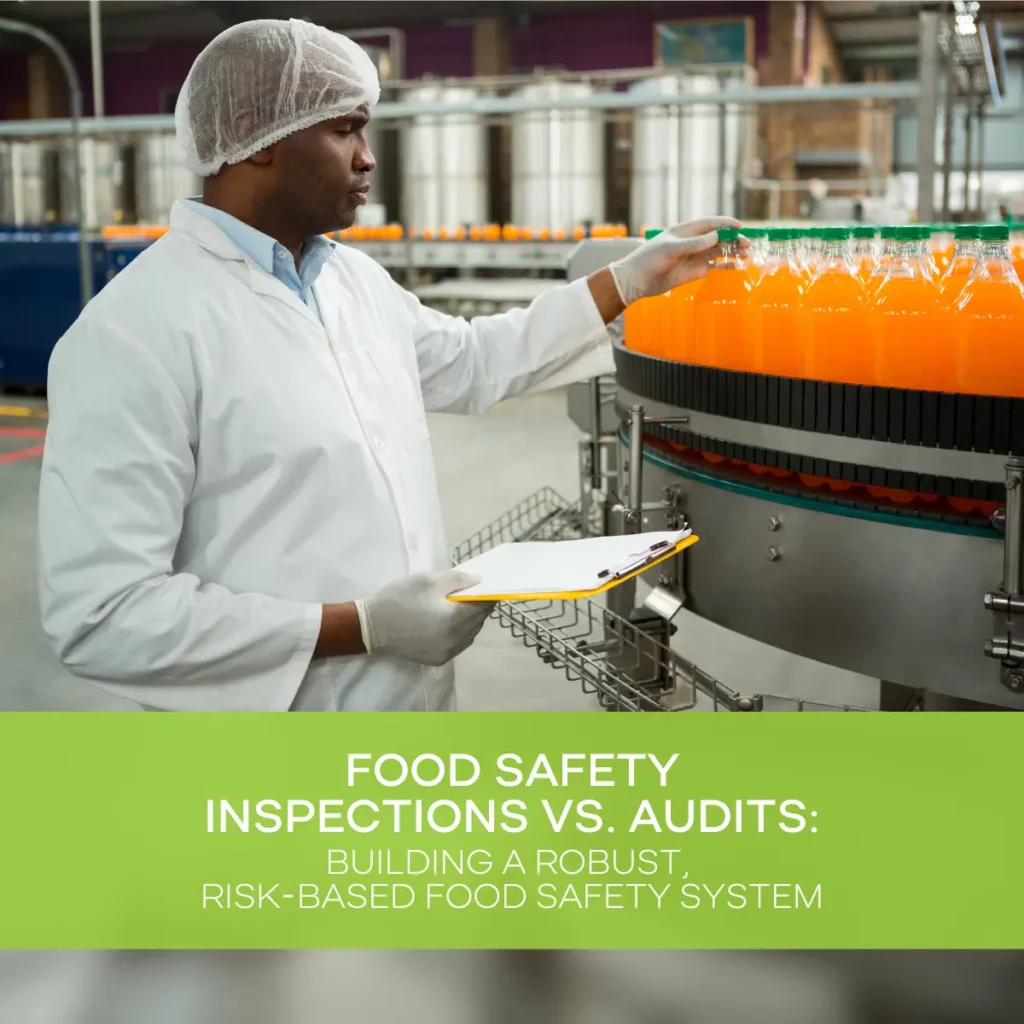
Inspections and internal audits are two distinct but complementary activities that require specialised skills, targeted training, and dynamic risk-based scheduling. Inspections catch today’s risks. Audits safeguard tomorrow. Together, they’re the twin engines of food safety. With the right people, smart scheduling, and a culture of constant improvement, inspections and audits turn compliance into confidence — and keep both your customers and your brand safe.
Who does inspections?
Production supervisors, operators, hygiene staff, and maintenance crews
Quality controllers
External specialists like pest control providers, maintenance/engineering staff, cleaning contractors
What makes a good inspector?
Sharp observation skills to spot hazards like cracks, leaks, or damaged equipment
A solid grasp of hygiene and sanitation practices (GMP)
The ability to complete checklists accurately
Confidence to take quick action when something is unsafe
Training that makes a difference:
GMP & hygiene programs
Equipment checks and integrity assessments
Foreign material prevention
Protocols for high-risk areas
Practical example: A trained production supervisor conducts pre-shift inspections, verifying sanitation compliance and equipment readiness before operations begin.
Who does audits?
Food safety team leaders/QA professionals
Trained internal auditors
Experts in HACCP, BRCGS, FSSC 22000, or ISO 22000
What makes a good auditor?
Systematic thinking and the ability to test processes against standards
Strong auditing techniques and questioning skills
Up-to-date regulatory knowledge
Root cause analysis to solve problems long-term
Training that builds confidence:
Internal auditor training
HACCP & risk management
Corrective and preventive action (CAPA)
Food fraud and vulnerability assessment
A practical example:
An audit team takes a deep dive into allergen management. They don’t just check labels — they review training records, cleaning procedures, and traceability systems to make sure allergen management and controls are watertight.
| Consideration | Inspections | Internal Audits |
|---|---|---|
| Typical Frequency | Daily/once per shift/weekly in high-risk zones | Quarterly/biannual |
| Monthly in low-risk areas | Annual, with focused high-risk reviews | |
| Main Focus | Immediate hazards (cracks, pests, hygiene lapses) | System gaps (training, documentation, controls) |
| Adjustment Triggers | Customer complaints, contamination, audit findings | Regulation changes, incident trends, emerging hazards |
Practical scheduling examples:
High-care/CCP/OPRPs in production: Daily hygiene checks + quarterly audits of processes
Dry storage: Monthly inspections + annual audits
After an incident: Step up to weekly inspections until risks are under control
Audits and inspections shouldn’t live in silos. One should always feed into the other.
How audits strengthen inspections:
Spotting patterns in inspection records (e.g., recurring hygiene failures)
Checking whether corrective actions are actually being followed up
Recommending changes to inspection scope or frequency
Identifying training needs for frontline staff
When to adjust inspection programs:
When audit non-conformities show weak spots
When customer complaints point to new risks
When new equipment or processes introduce new hazards
When regulations change and customer requirements or standards get tighter
✅ Two Layers of Protection: Use inspections for immediate hazards and audits to test the system behind them
✅ Focused Training: Give inspectors practical skills and auditors analytical depth
✅ Stay Flexible: Change inspection routines as risks shift or new hazards emerge
✅ Use the Data: Turn audit findings into smarter inspection programs and targeted training
✅ Work Together: Encourage teamwork between inspection and audit staff instead of siloed approaches
Food safety isn’t about ticking boxes — it’s about protecting people and safeguarding your brand every single day. By combining regular inspections with deeper audits, businesses can build a layered defence that’s both practical and resilient. Inspections keep the floor safe in the moment, while audits make sure the entire system is strong for the future. The true power of this system emerges when inspection programs are continuously refined based on audit findings, corrective actions, and customer feedback, creating a self-improving food safety ecosystem. Together, they create a cycle of learning and improvement that drives real food safety culture — not just compliance.
For assistance with your Internal Auditing Programme or Internal Auditor training, please email info@entecom.co.za or visit our website www.entecom.co.,za for more information
No results found.